Fast-moving storm drill: three teams, one task list, and a clock
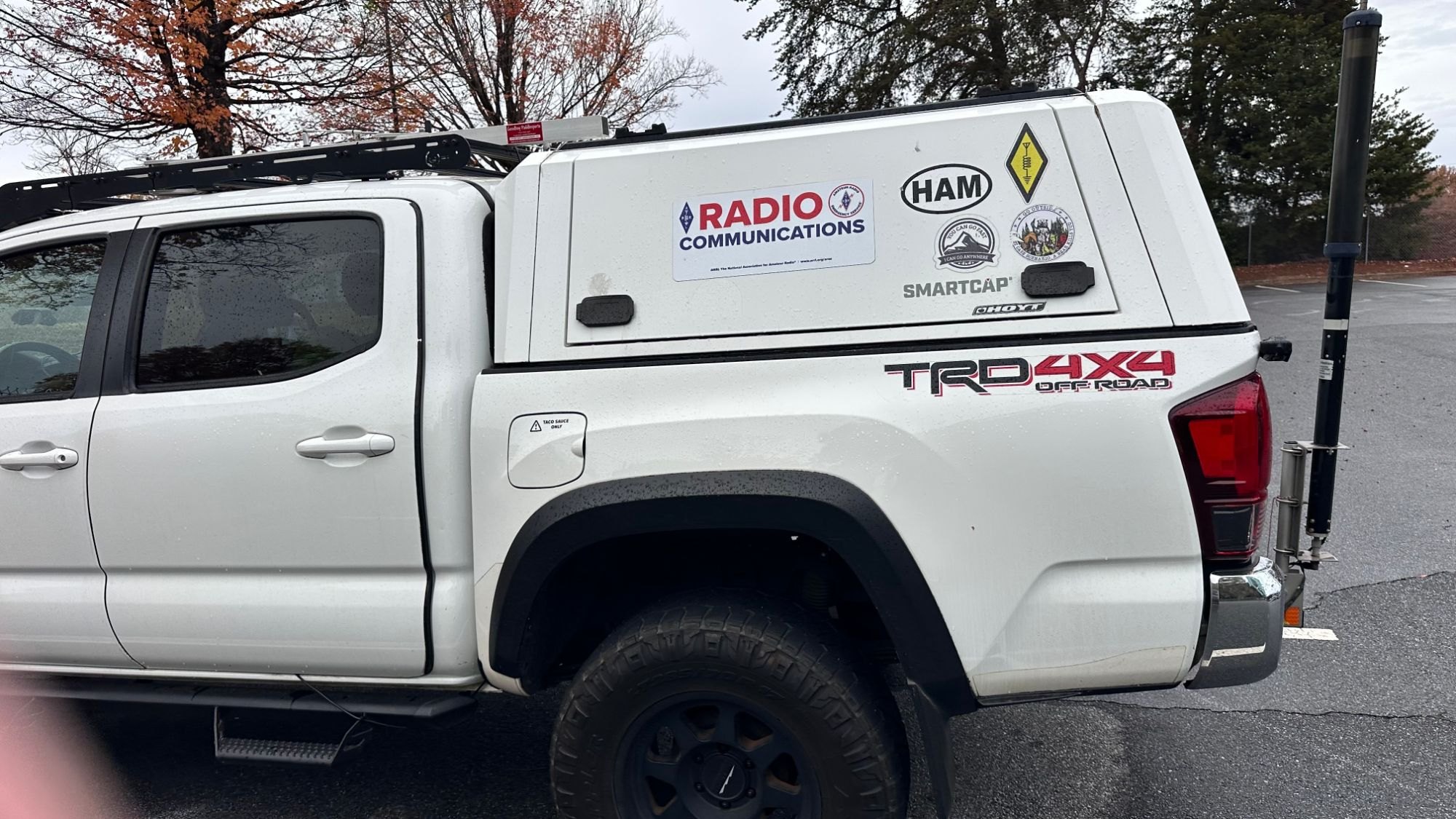
With a storm scripted to reach Atlanta within hours, three DeKalb ARES teams deployed to a parking lot, raised antennas in the drizzle and worked down a checklist of twelve stations and modes, from 80 m to UHF to Winlink. Most boxes got ticked. The ones that did not are the useful part.
On Saturday, November 21, 2026, DeKalb ARES ran a deployment drill built around one idea: a storm is approaching Atlanta at high speed, and you have very little time. Three teams had to get from vehicles to working stations, then make contact on as many of a fixed list of stations and modes as they could before the clock ran out.
It was cold, wet and grey, which is roughly the weather that would come with the real thing.
The task
Each team carried the same one-page checklist. The job was to make a confirmed connection on each line and write down who did it and how:
- Any station on the 10 m, 20 m and 40 m bands, and on 80 m by voice and separately by data or CW.
- Winlink over HF, on any band.
- The three W4BOC repeaters: the primary on 146.760, the backup on 145.450, and the 1.25 m machine on 224.760.
- The UHF Fusion repeater on 444.250 and the UHF DMR repeater on 441.8125.
- Winlink on 2 m, through the Stone Mountain gateway.
Nothing on the list is exotic. All of it is what we would be asked to do on a bad day, and doing it from a parking lot with what came in the car is a different thing from doing it from the shack.
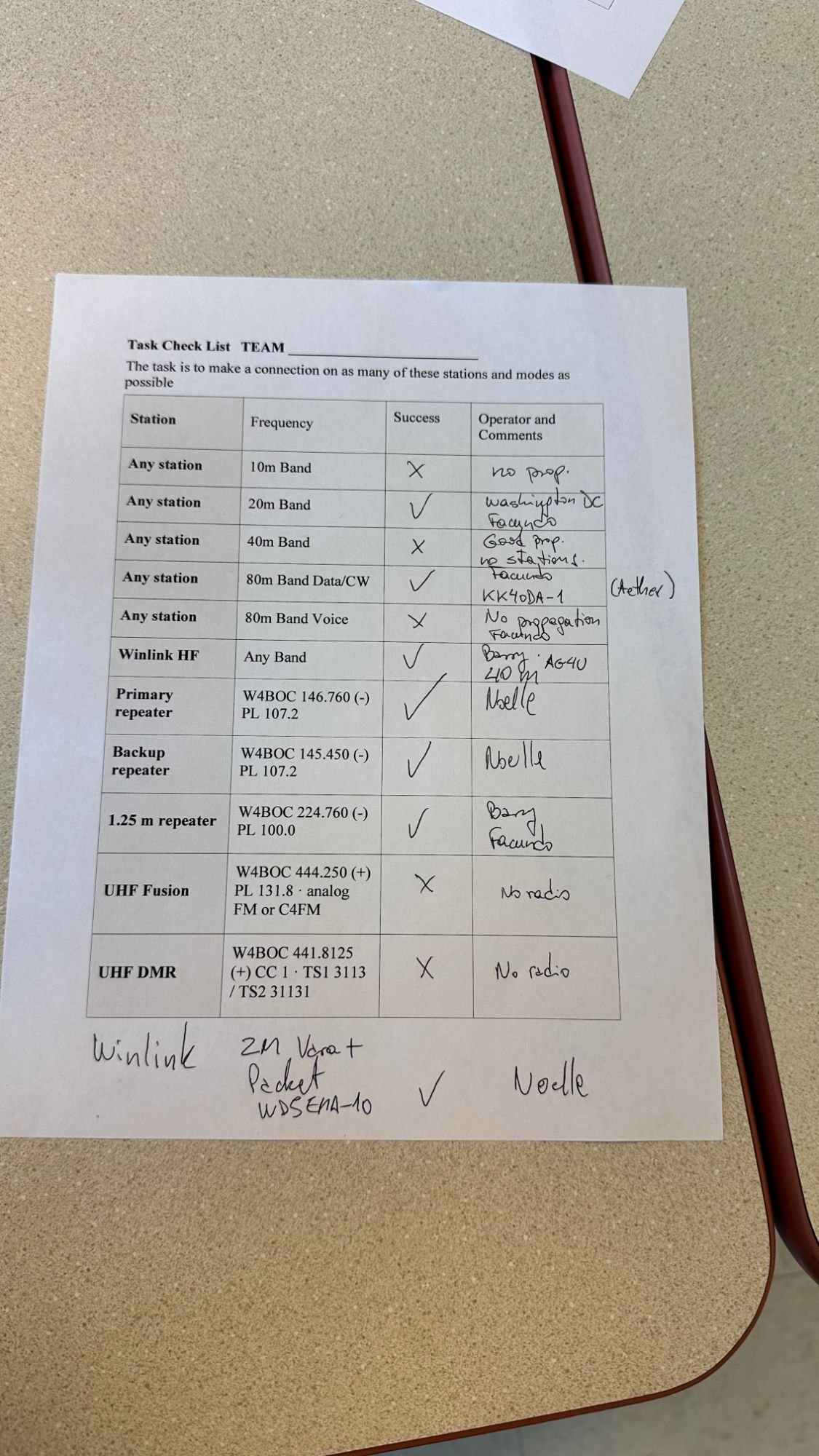
One team’s sheet at the end of the exercise. Ticks for 20 m, 80 m data, Winlink HF, all three repeaters and 2 m Winlink; crosses for 10 m, 40 m, 80 m voice and the two UHF digital repeaters.
Getting on the air
The first job was antennas. A wire went up on a push-up pole lashed to a car, a vertical on a telescoping mast beside a pickup, and another mast at the building entrance for VHF. Not long after, in the drizzle, the teams had HF and VHF stations running off batteries on folding tables.
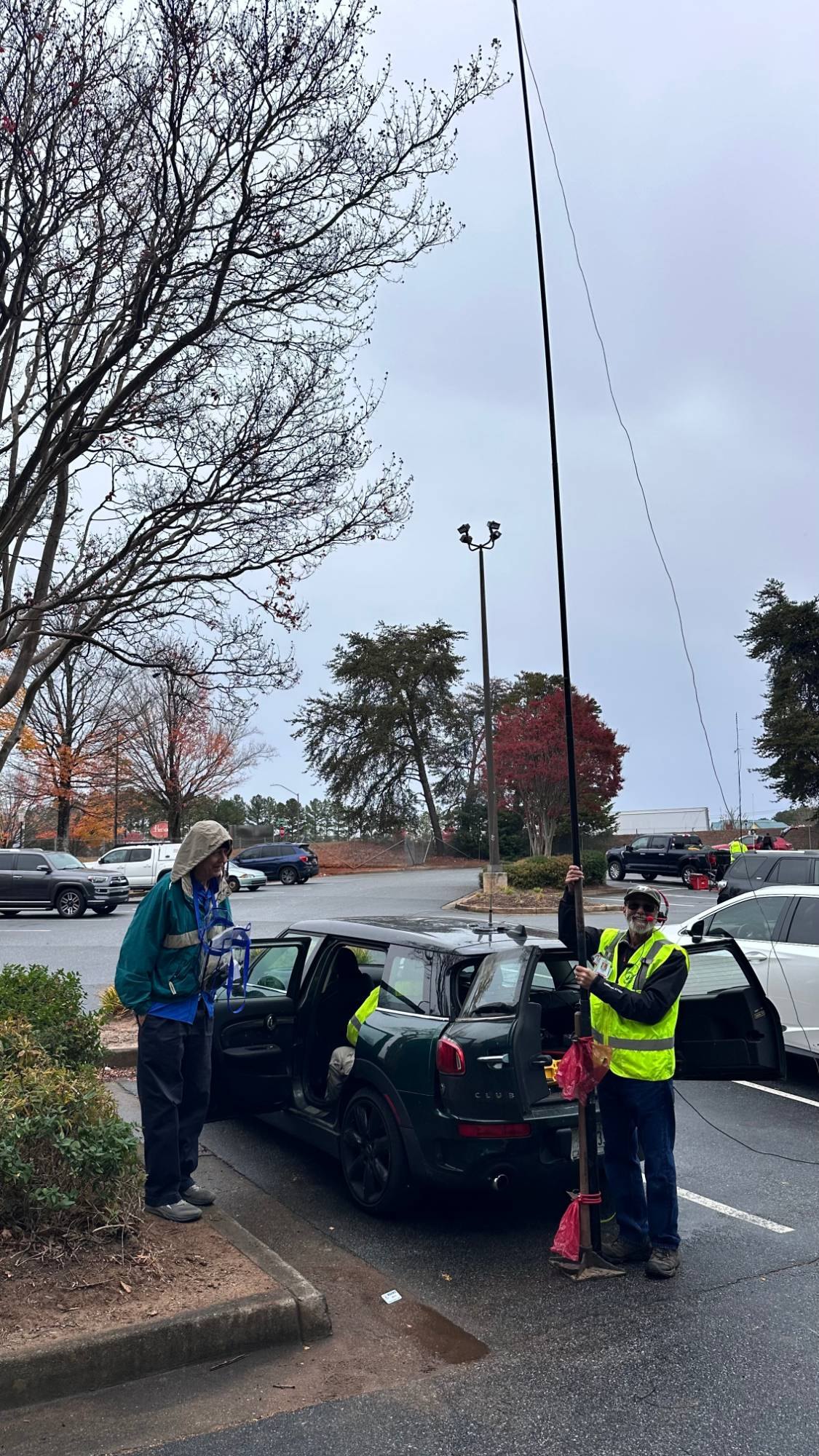
An HF wire going up on a push-up pole, lashed to the back of a car.
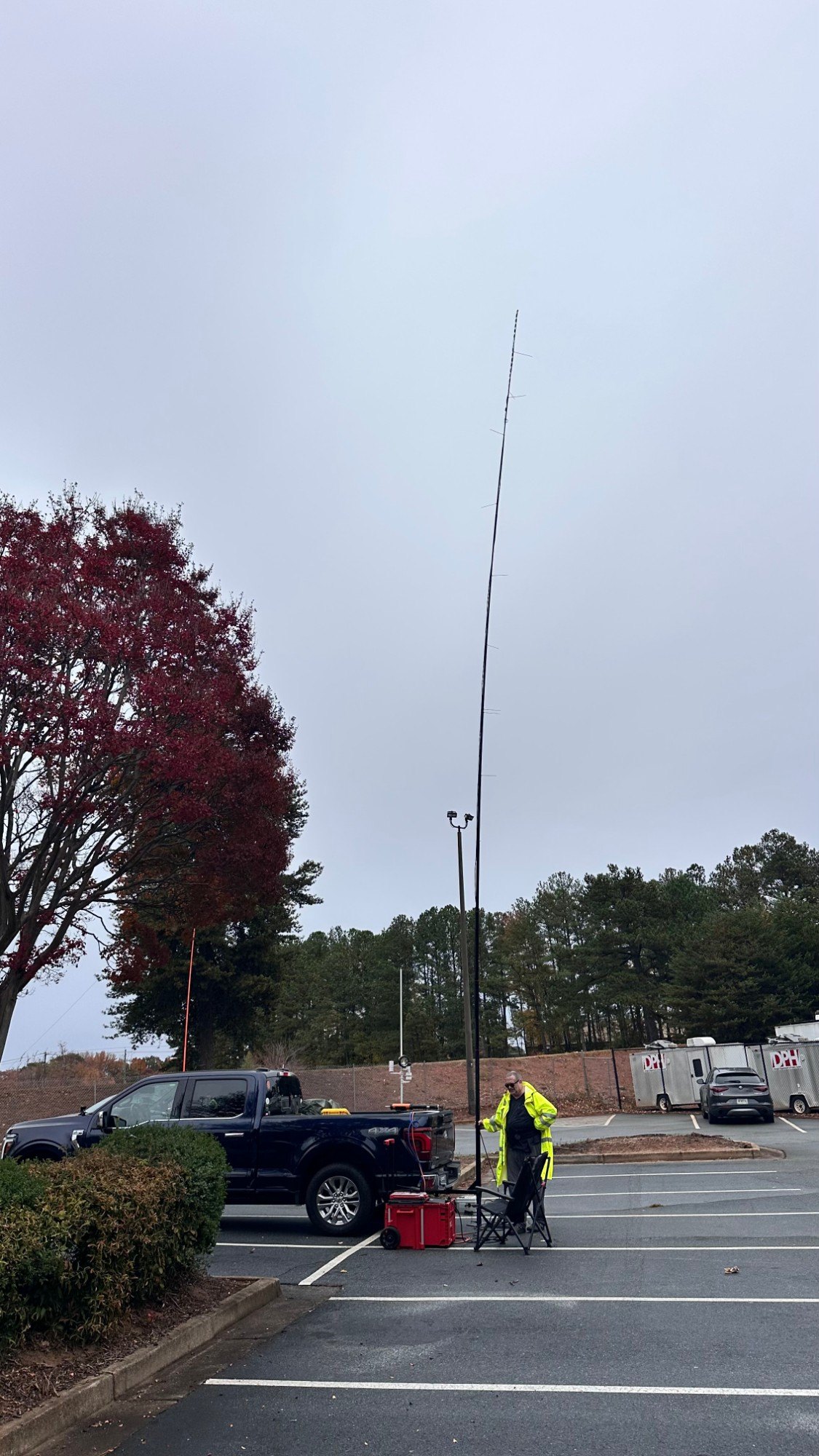
A vertical on a telescoping mast beside the truck.
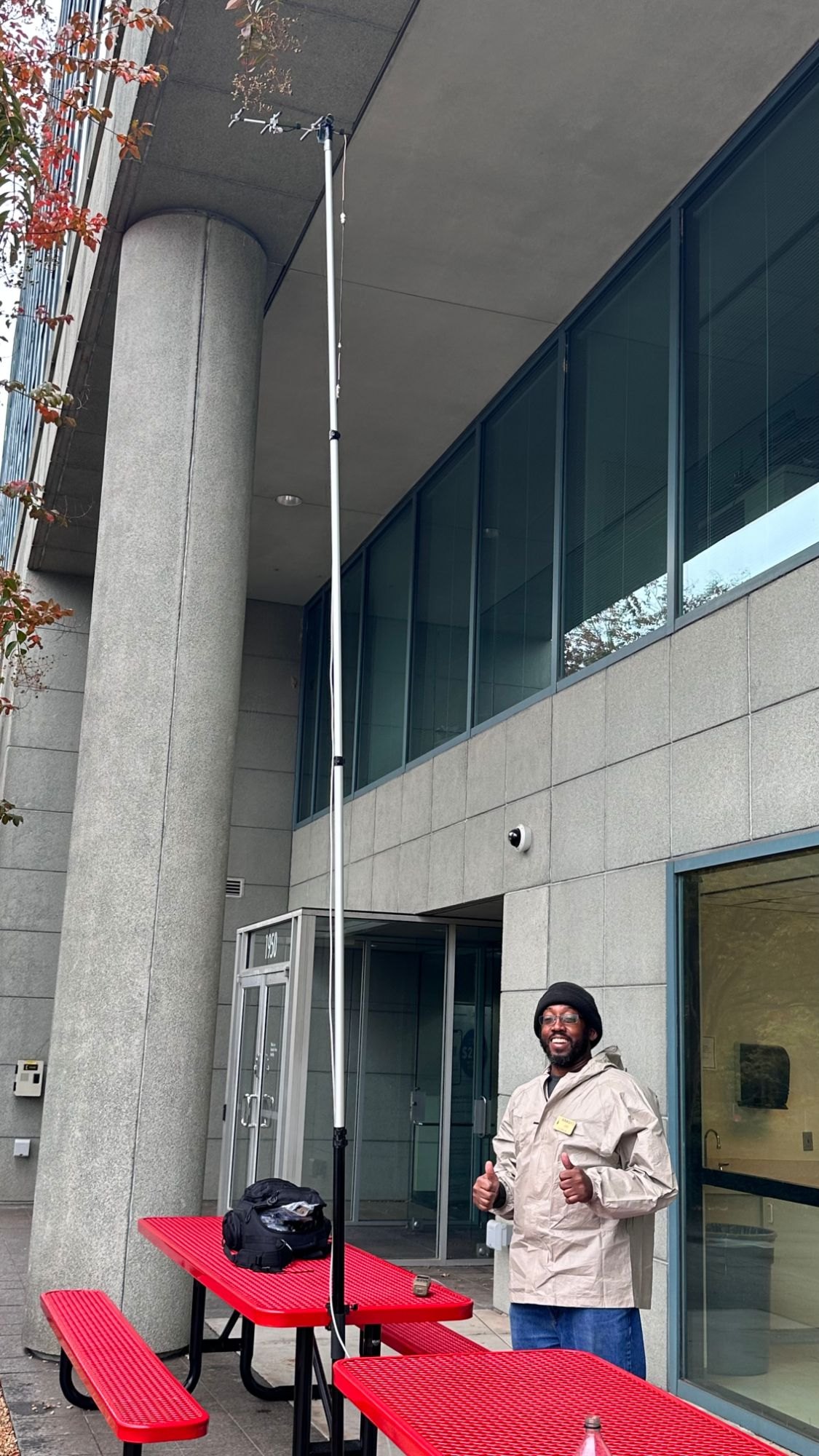
The VHF mast at the building entrance.
What one team logged
The sheet above belongs to the team of Facundo Fernández (KK4ODA), Noelle Conant (W4WYF) and Barry Kanne (W4TGA), and it is a fair picture of the day.
HF was a mixed bag, and not for lack of trying. 10 m had no propagation at all. 20 m was open and produced a contact with Washington, DC. 40 m had good propagation but nobody to talk to. 80 m voice was dead, while 80 m data worked. Winlink over HF went through on 40 m via the AG4U gateway. That is the honest shape of HF in late November on a wet morning: you take what the bands give you, and having a data mode in the bag is what turns a dead band into a ticked box.
VHF did what VHF does. All three W4BOC repeaters were worked without drama, the two 2 m machines by Noelle and the 1.25 m repeater by Barry and Facundo.
2 m Winlink worked over both modes. Noelle reached the Stone Mountain gateway on VARA FM (WD5EMA-15) and on packet (WD5EMA-10), the two paths the gateway has offered since it was reorganised in October.
Two boxes stayed empty for the simplest reason there is. Nobody on the team had brought a radio that could do Fusion or DMR. The UHF digital repeaters are on the task list because the county and neighbouring groups use them, and the lesson writes itself: a go-kit is only as capable as what is actually in it.
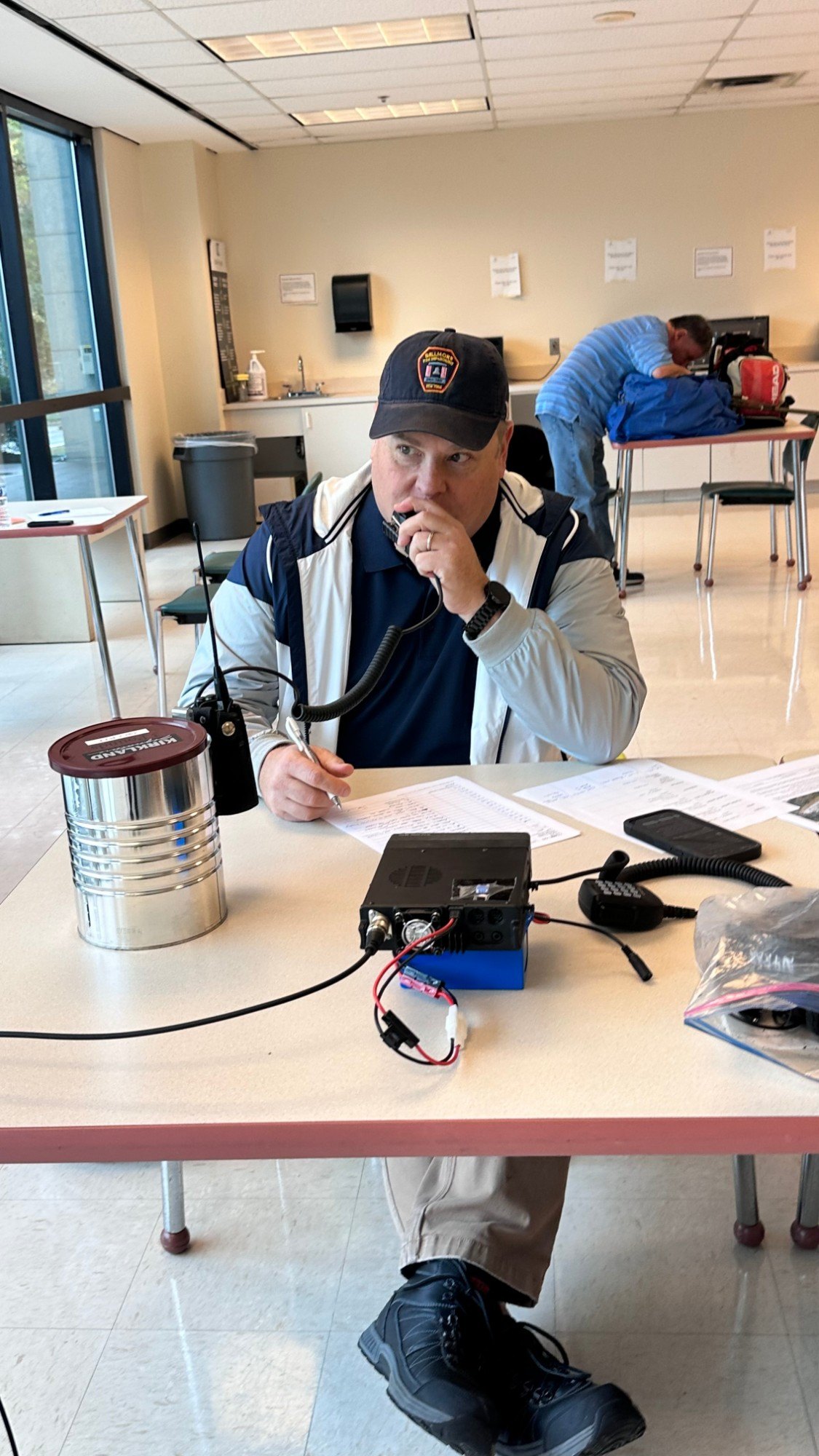
Working the repeaters and keeping the log.
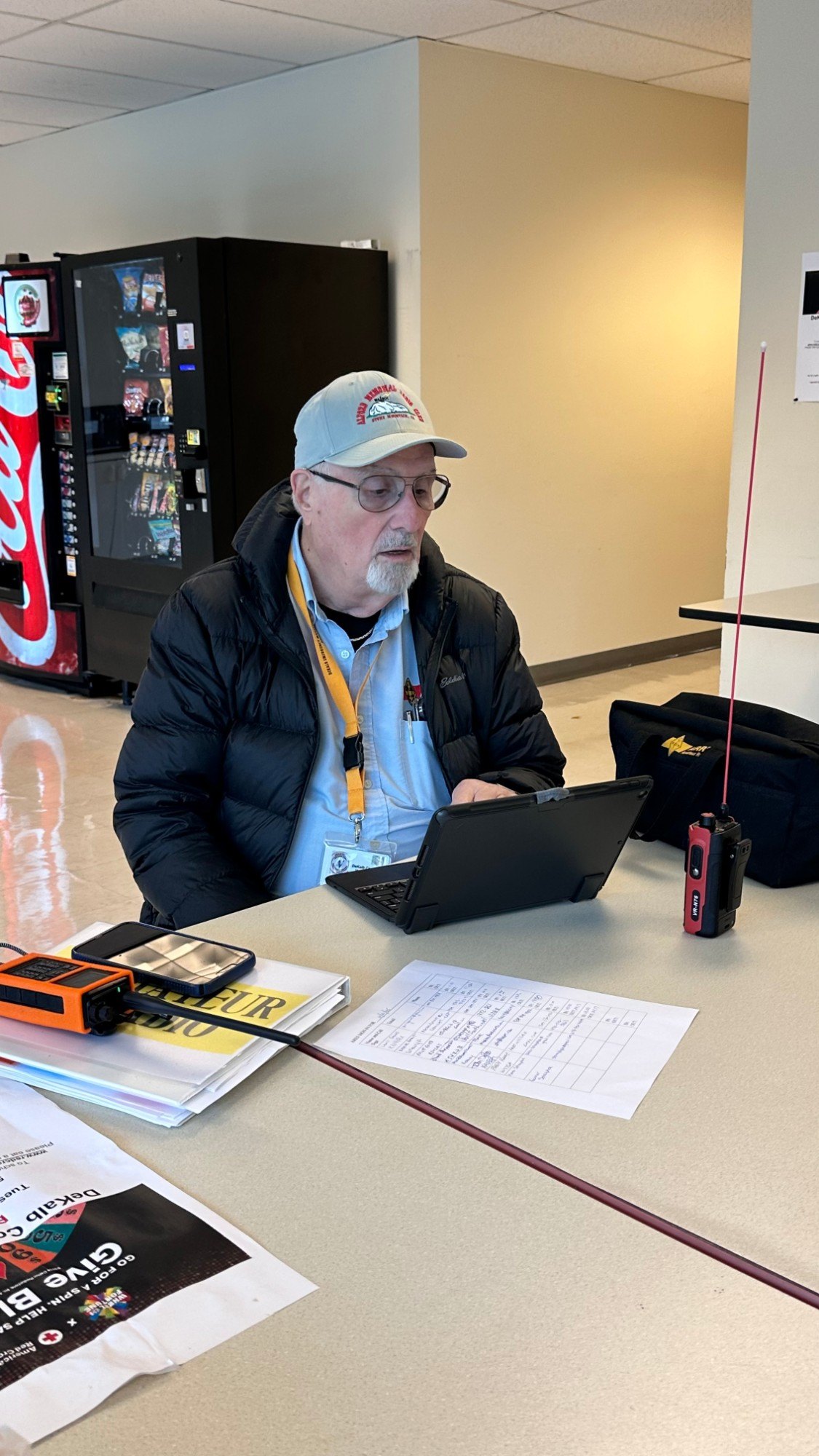
A digital station on a laptop, with handhelds for the VHF tasks.
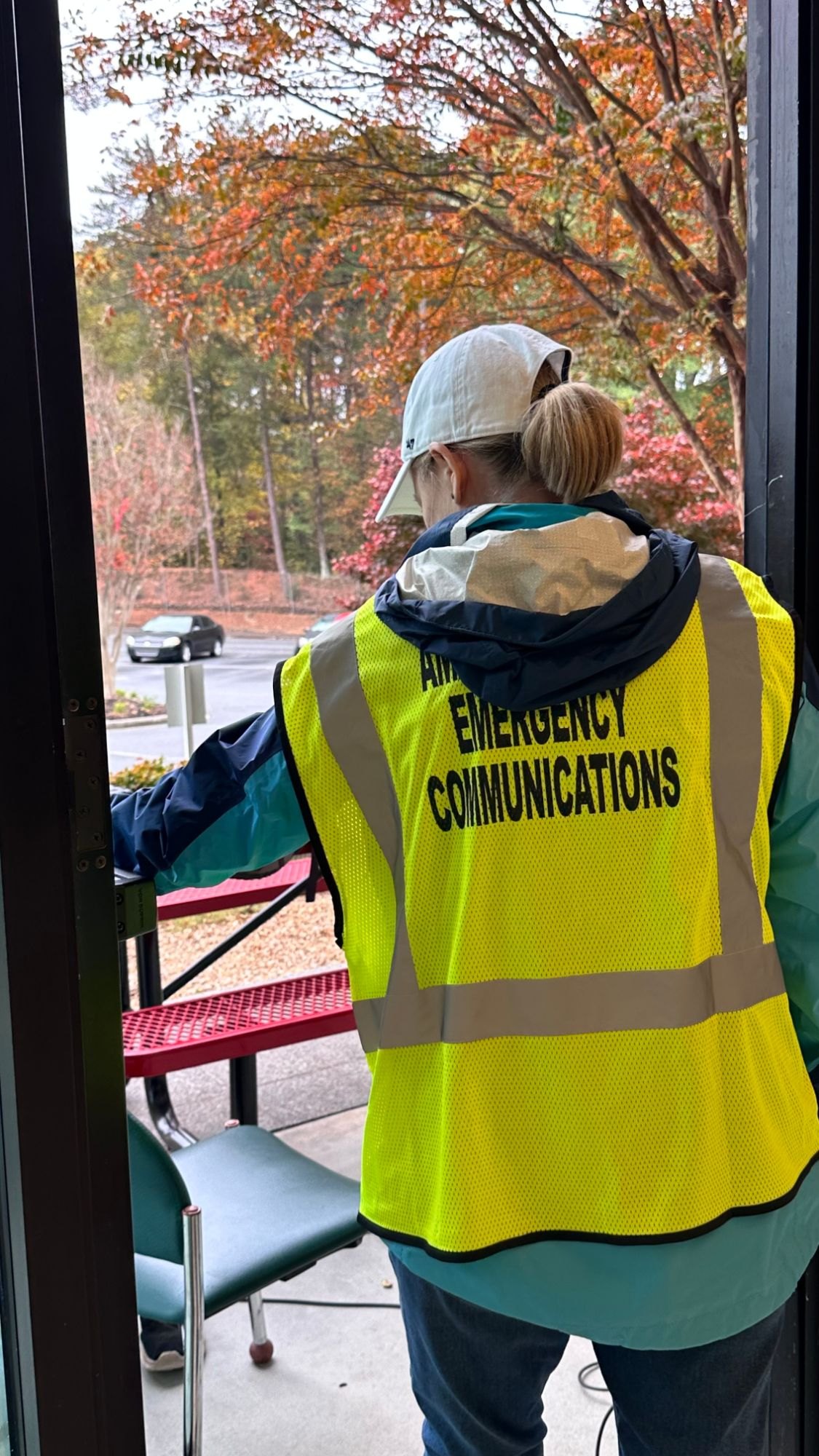
Between tasks.
Why this format is worth repeating
A checklist drill scores itself. At the end of the hour every team can see, line by line, what it could and could not do with the equipment it brought, and the crosses point straight at the fix. This time the fixes are concrete:
- Carry a UHF digital radio in at least one kit per team, programmed for the Fusion and DMR repeaters.
- Expect HF voice to fail and plan for data. The 80 m voice cross and the 80 m data tick sat one line apart on the same sheet.
- Know the gateway list before you leave the house. The Winlink HF contact went to AG4U, and the 2 m contacts to Stone Mountain, because the team knew which gateways to call and on what.
The current frequencies, gateways and SSIDs are on the quick reference card, and the after-action findings from every drill since 2025 are in the members lessons learned knowledge base.