Atlanta UASI communications exercise: Operation Ainsley
At least eleven DeKalb ARES operators worked the regional Atlanta UASI communications functional exercise, with a field station on the air by 7:30 AM and satellite internet restoring the DeKalb Mobile Command Vehicle after its networks were cut by design. Voice, Winlink, HF and APRS all carried traffic, and the exercise found exactly one weakness worth having found: written traffic between our own stations.
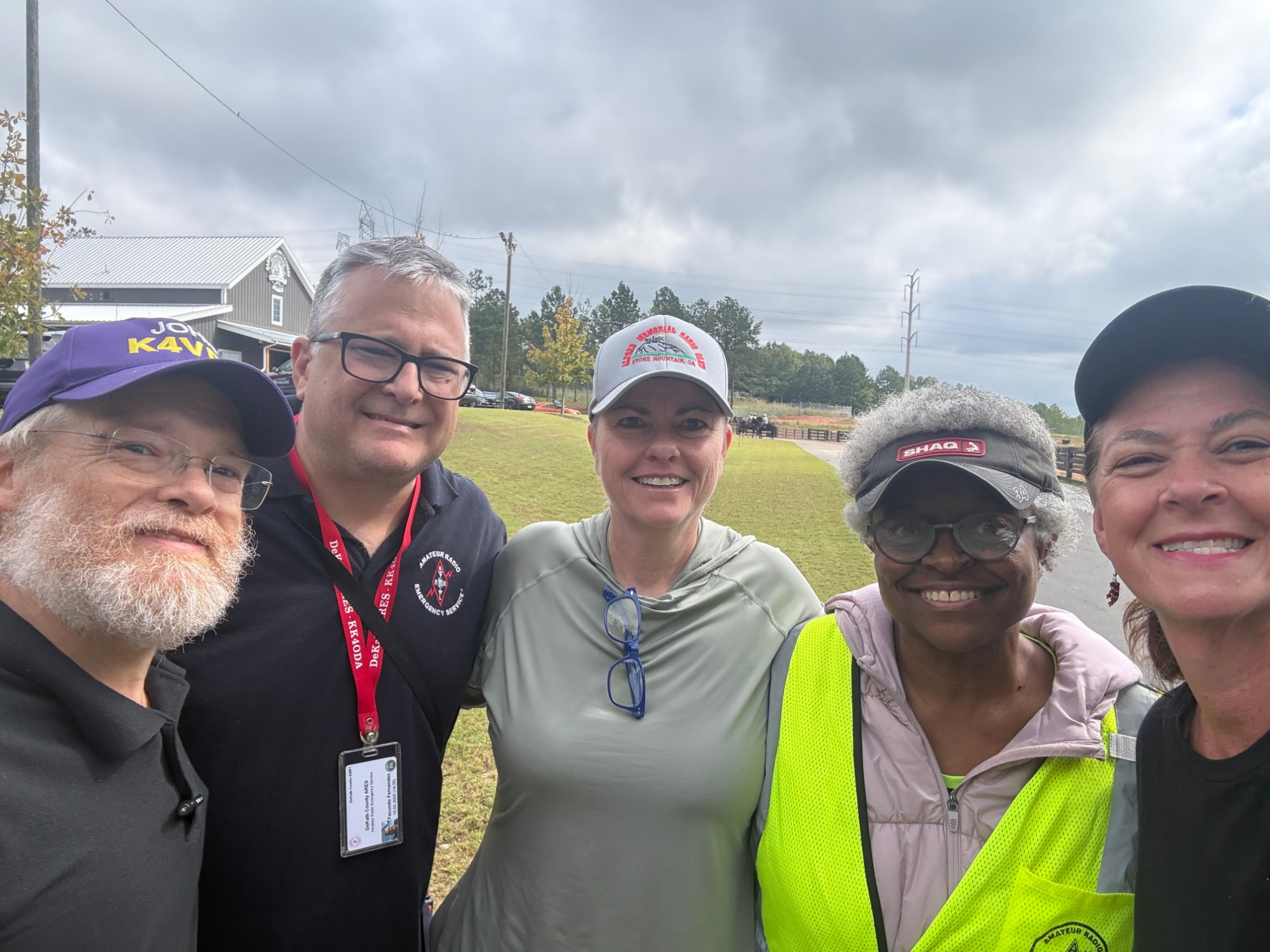
On Wednesday, October 1, 2026, DeKalb ARES took part in the Atlanta UASI Communications Functional Exercise, run under the name Operation Ainsley. At least eleven licensed operators worked the exercise from two or more sites: the DeKalb County Mobile Command Vehicle, and a field team at Mary Scott Park, roughly 7,000 feet from FEMA Region 4 headquarters.
This was a multi-agency exercise rather than one of our own drills, which makes it the clearest test we get of whether we can actually be useful to a served agency on the day.
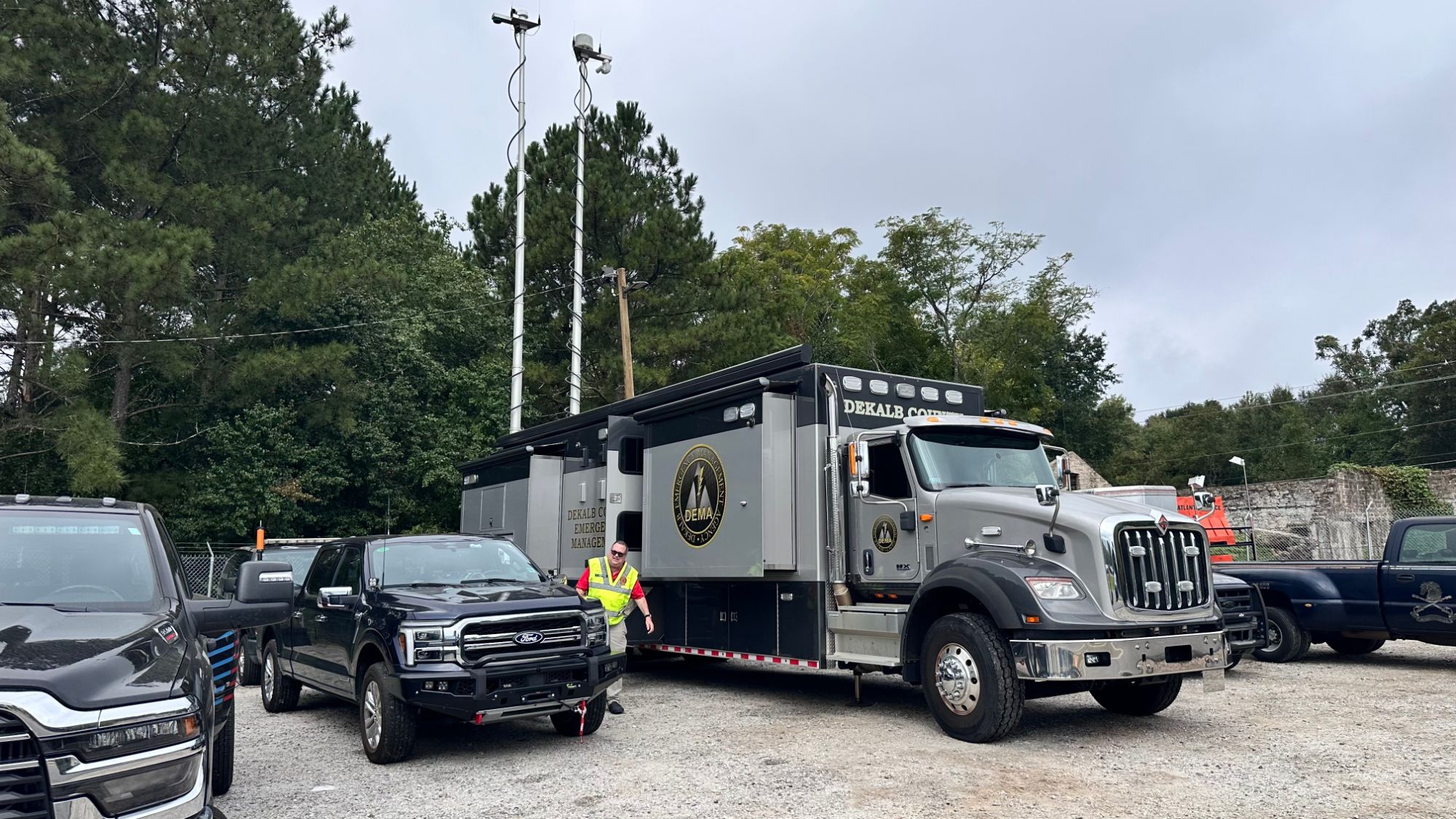
The DeKalb County Emergency Management Mobile Command Vehicle, masts up.
What we put on the air
A field station was operating by 7:30 AM, VHF and UHF were fully up at 8:45, and HF Winlink followed at about 9:30. Across the day we used 2 m simplex, the 146.760 repeater, an AMRC repeater, Winlink over HF, packet and VARA FM, HF SSB mainly on 20 m, APRS position reporting, and Starlink satellite internet.
Jim Penland (N4RAR) and Barry Kanne (W4TGA) led from the Mobile Command Vehicle, linked us into the regional nets, and kept work flowing to the teams. Cynthia Devroy (KR4CJZ) ran the DeKalb ARES simplex net from the MCV.
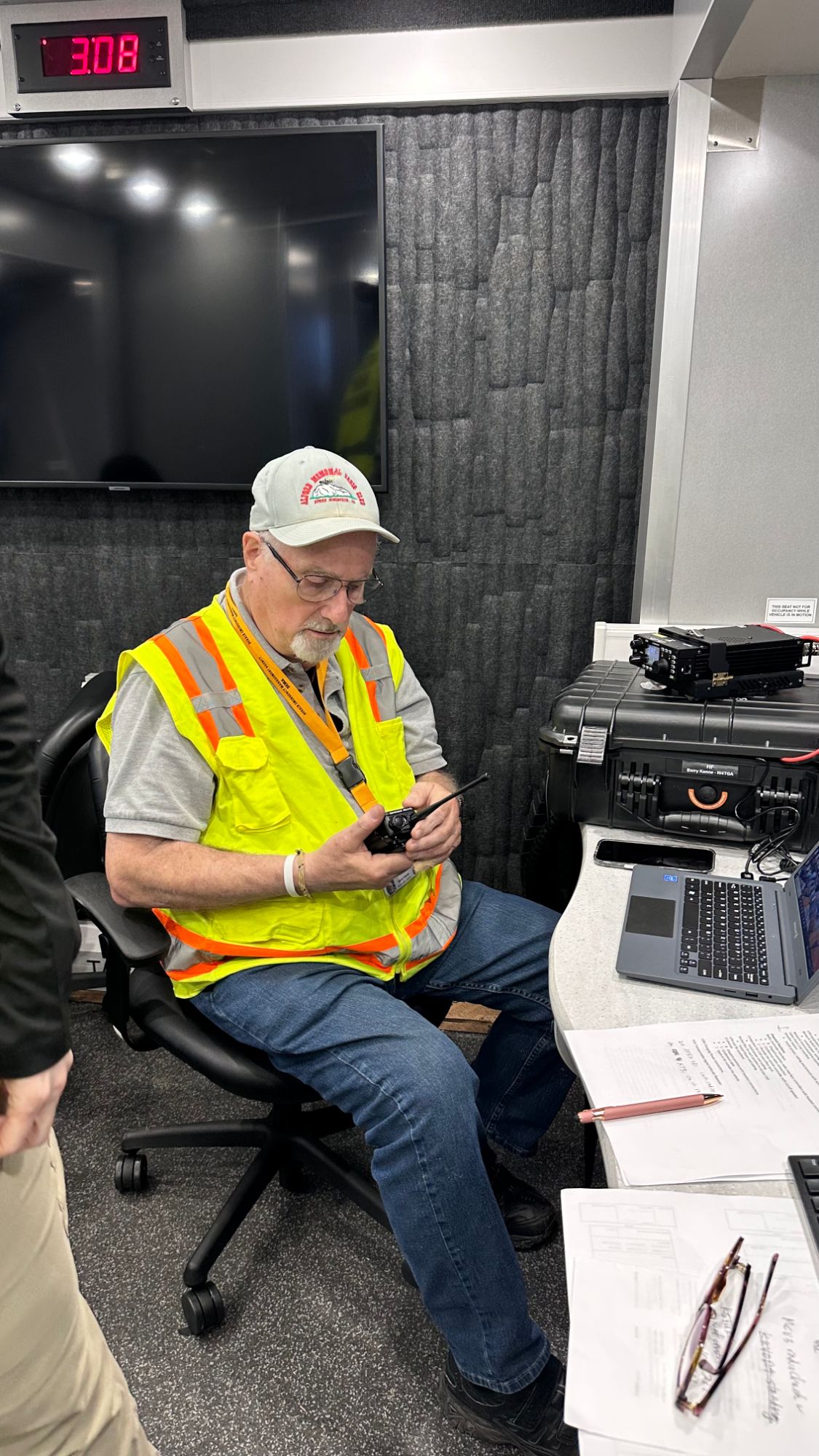
Operating from inside the command vehicle.
Keeping an agency connected
Our strongest contribution was the simplest to describe. The Mobile Command Vehicle lost its internet by design, and staff could not complete their task without it. Scott Sheppard (KJ4ZZB) put a DEMA laptop onto his Starlink terminal, then used Winlink to send ICS 206 forms through to DEMA email addresses. He also spent part of the day programming radios for command vehicle staff.
That last point is worth drawing out, because it is not the sort of thing anyone trains for deliberately. Knowing how to programme other people’s radios, not only your own, turned out to be a capability a partner agency actively wanted.
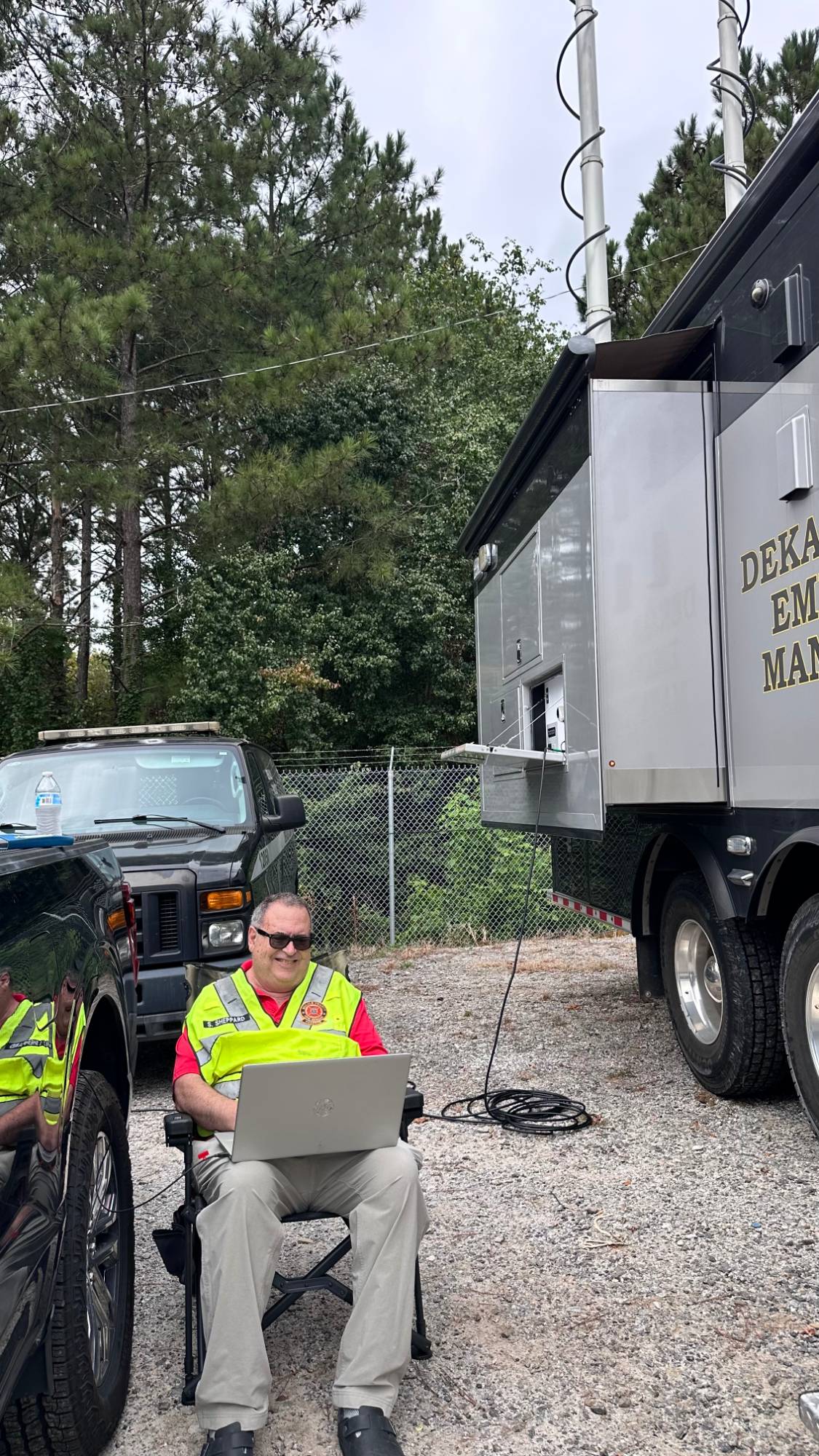
Scott Sheppard (KJ4ZZB) working beside the command vehicle.
Out in the field
Mike Boatright (KO4WX) and Ramos (KI4JLT) formed Team Bravo at Mary Scott Park, running a VHF net on an AMRC repeater with a call every five minutes and handling incoming FEMA traffic.
Elsewhere, John DeRoo (K4VER) had an HF station on the air and working other states in under thirty minutes, which is the direct payoff of regular portable operating. Noelle Conant (W4WYF) reached the W4KIB-10 RMS gateway on packet using nothing but a handheld, a laptop and a roll-up J-pole, a useful reminder of how little equipment Winlink actually needs. Roberta Prosser (K4QOA) brought a LoRa mesh node on her car, a technology Gwinnett ARES is already using.
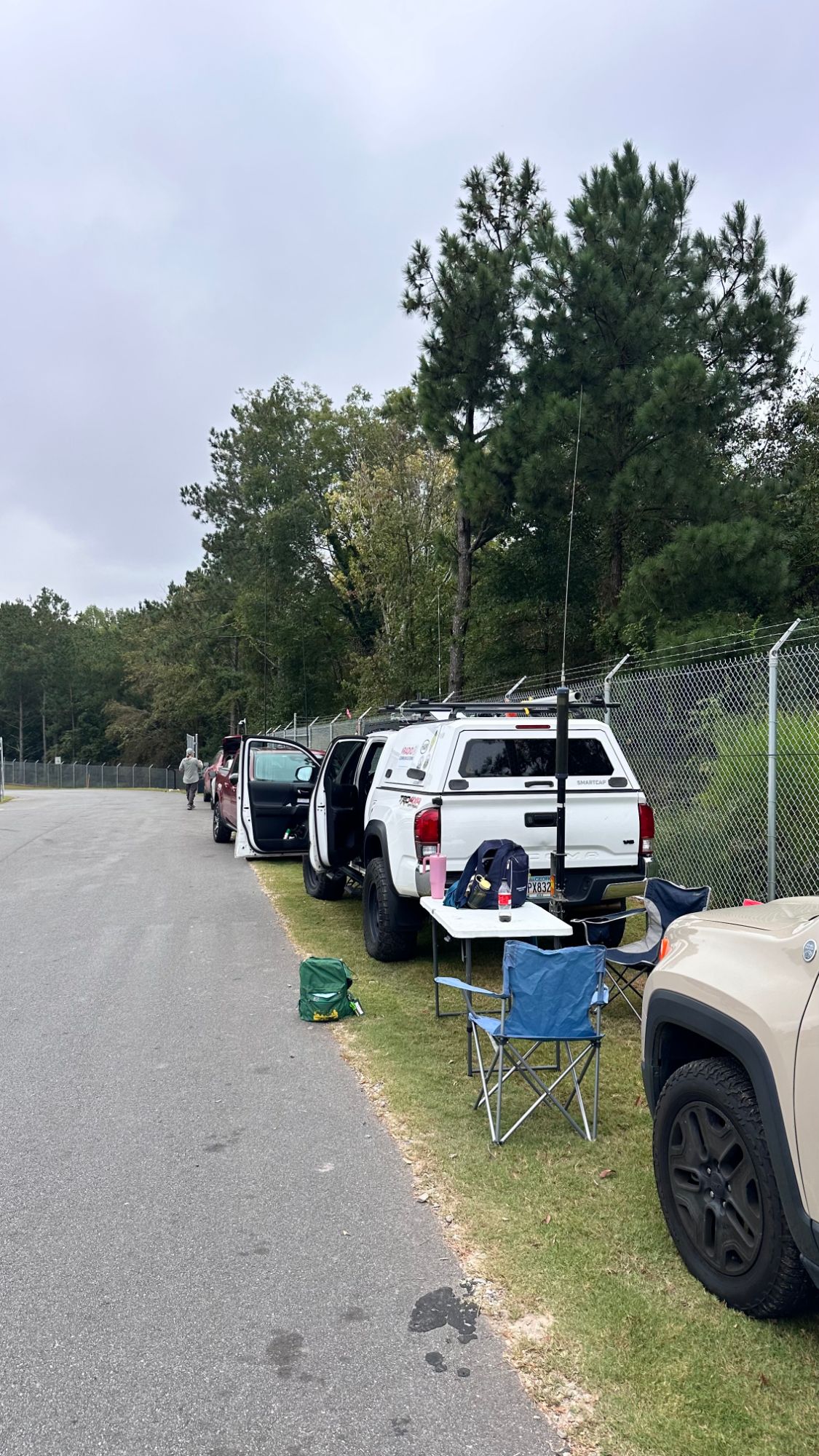
Member stations along the fence line.
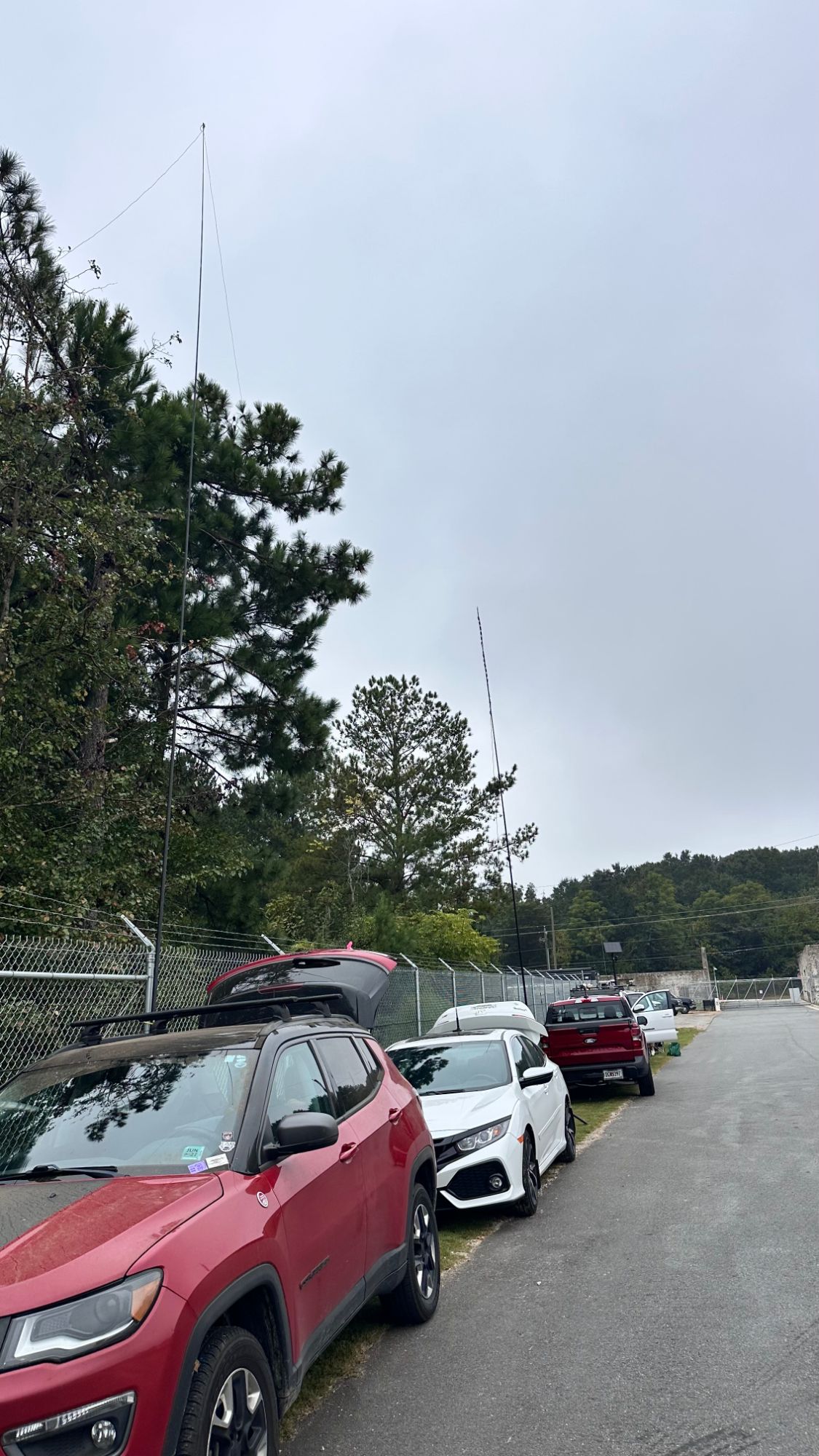
Antennas up.
What did not work
Voice worked all day. Written traffic between our own stations did not. Of the two Winlink messages reported between DeKalb ARES teams, neither arrived. One station connected to three separate RMS gateways and received nothing, and an ICS 213 sent on 40 m never turned up. A second message went to an operator who, it emerged afterwards, was not checking Winlink that day.
The cause has not been pinned down, but the conditions that allowed it are clear enough: no agreed addressing and no published schedule of who checks Winlink and how often. Two gateway problems contributed. The WD5EMA-10 gateway on Stone Mountain answers VARA FM only, so operators equipped for plain packet have no local path to it, and the packet gateway at Fire Headquarters did not respond at all.
A few other things are worth recording honestly. A two-operator team had to drop its net for about 45 minutes to raise antennas, because two people cannot do both at once. An untested antenna configuration cost the field team HF time. And the channel list we were given turned out to be a transmit list rather than a monitor list, so none of those channels carried traffic we could follow.
What we are doing about it
The corrective actions are already recorded, and the first three matter most before the next deployment:
- Publish a Winlink directory before each exercise, naming every team’s callsign, who checks Winlink, and how often.
- Ask Incident Command for a start-of-operations message and pre-assigned traffic callsigns, recorded on the ICS 205.
- Add plain packet to the WD5EMA-10 gateway on Stone Mountain, and diagnose the Fire Headquarters gateway.
- Field teams of at least three operators, so one can hold the net while others work.
- Test every antenna and digital setup in its exact field configuration before deployment.
- Run a member workshop on programming the radio models partner agencies use.
Worth saying
Eleven operators gave up a working Wednesday, and the agencies noticed. We kept a command post connected when its own systems were down, put HF on the air in half an hour, answered FEMA traffic from a public park, and explained amateur radio to passers-by while doing it. Annette Lowe (KQ4UKF) helped change a tire without dropping off the nets, which is about as good a summary of the day’s spirit as anything.
The gap we found is narrow and fixable, and finding it in an exercise is exactly what exercises are for.
The full after-action findings from this exercise, along with every other drill since 2025, are in the members lessons learned knowledge base.